How we think —

A Mind Map, four values, and the thinking that comes before any pixel.

Every U-Spire project moves through six stages. Five run in parallel — listening, learning, deciding, positioning, pricing — until they settle into something we both recognise. Only then do we bring the team together to build it.

Why a Mind Map —

Most studios start at stage six and reverse-engineer the rest. We invert that. Five stages of thinking come first, in parallel, so the doing has somewhere to land. The Mind Map is the visible shape of that order — and it's the reason a U-Spire project feels considered from the first conversation, not just from the first design review.

The five thinking stages

All running together, until they settle.

The five stages aren't a sequence. They're five lenses we look through at the same time — each one sharpening as the others do. We move to building only when all five point in the same direction.

01

Idea & Concept

We listen first. Every project arrives with a vision; our job is to genuinely understand it before we agree to make anything.

What we ask

  • Why this, and why now?
  • Who is it for — specifically, not 'everyone'?
  • What does success look like a year from now?
  • What can we leave out without losing the point?

What comes out

A short written brief in plain English. One page. Read aloud to make sure it sounds like the work we're describing.

You can see this in —

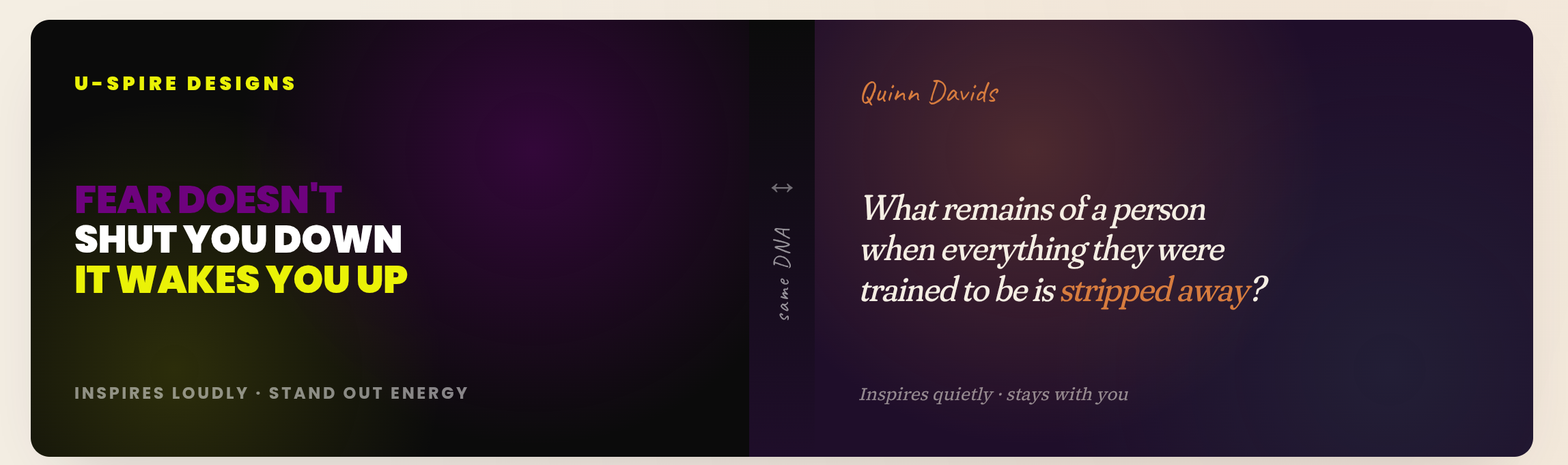
Quinn Davids · the brand-voice study. Two voices on one page — U-Spire's loud, Quinn's quiet. Naming the contrast was the first real decision.

Read the case study
02

Learning & Strategy

We translate the idea into a plan grounded in research — audience, references, constraints. No buzzwords; just the work the work has to do.

What we ask

  • Who arrives at this site, in what state, on what device?
  • What references would they recognise as 'doing this well'?
  • What adjacent or competitive work do we want to know about?
  • What cultural or technical constraints shape every decision downstream?

What comes out

A short strategy doc — audience, references, constraints. Short enough to read in one sitting, sharp enough to settle arguments later.

You can see this in —

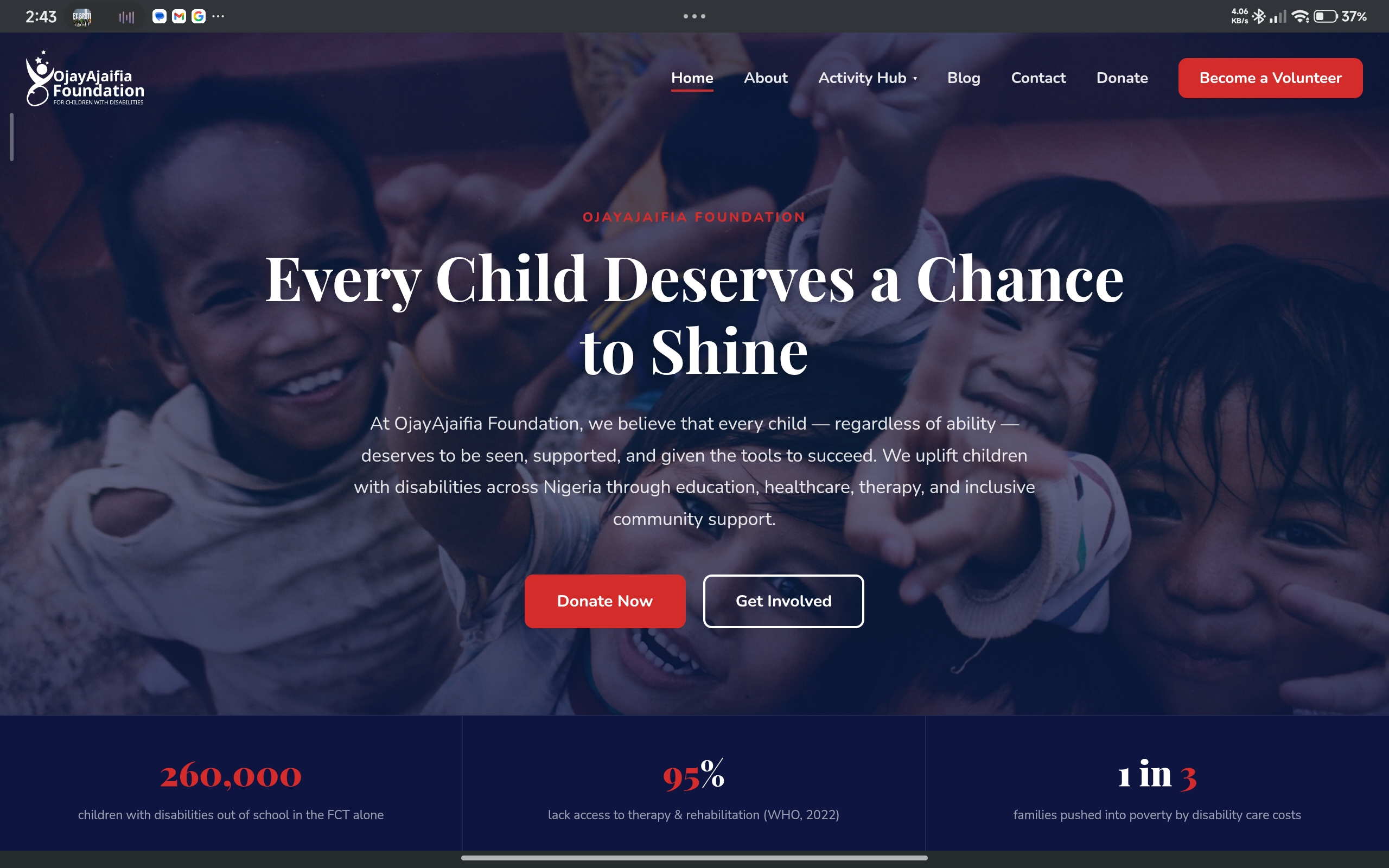
OjayAjaifia Foundation · mobile-first by physics. Most Nigerian visitors arrive on a phone over a cellular connection. That single fact drove every layout call.

Read the case study

03

Products & Services

We name what we're actually building — and what we're not. A specific shape replaces a vague intention.

What we ask

  • Is this a website, a web app, a mobile app, a print piece, a brand kit, or some mix?
  • What are the pages or screens — listed, not implied?
  • What does the visitor do first, second, third?
  • What is explicitly out of scope for v1?

What comes out

A page list, a primary flow, and an out-of-scope list. Boring; load-bearing.

You can see this in —

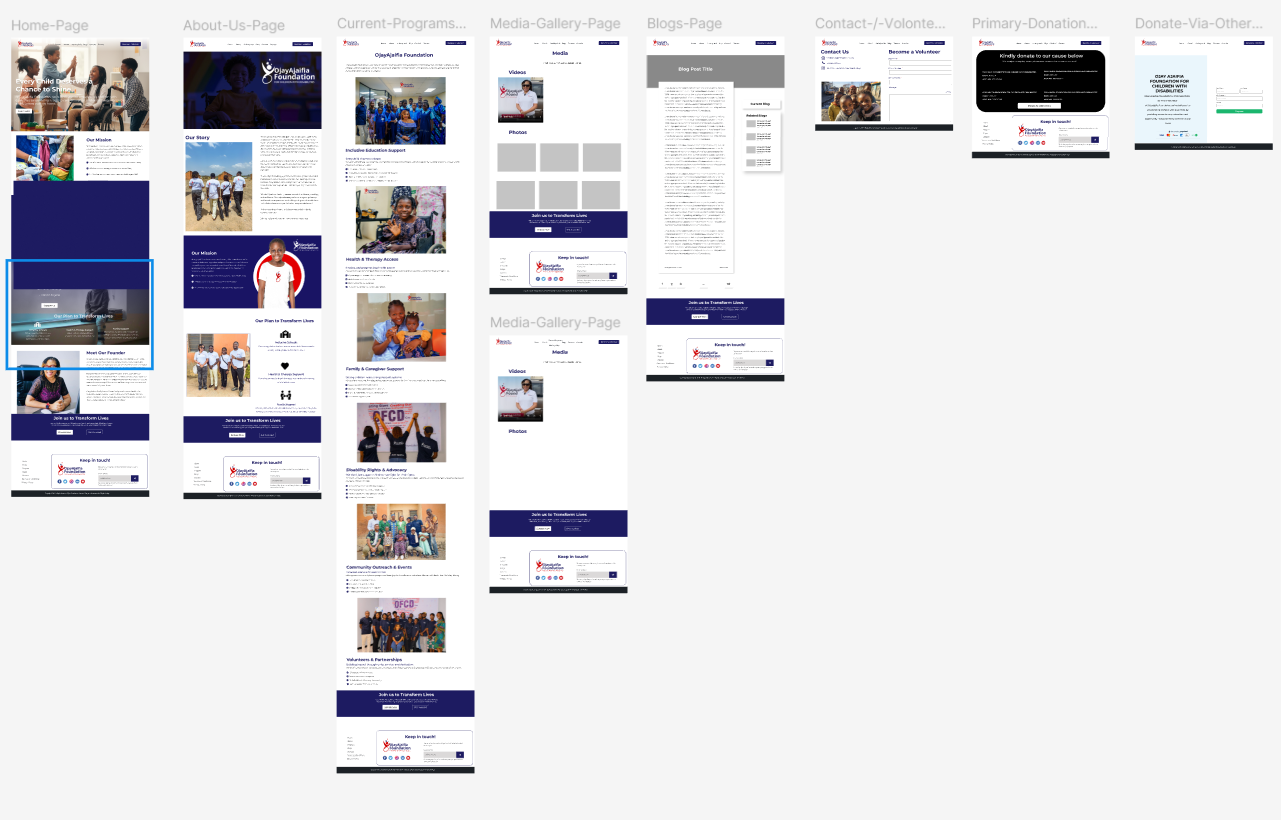
OjayAjaifia Foundation · the whole site, at once. Eight pages on one Figma board so the architecture was decided before any pixel went final.

Read the case study

04

Marketing & Sales

The pitch lives in the work itself — how we explain a decision, how we show the thinking, how we name what we're building.

What we ask

  • How will the work be discovered? Word of mouth, search, social, press?
  • What does a credible stranger need to see in the first thirty seconds?
  • What single sentence describes this project to its audience?
  • What story does the site tell even before anyone reads the copy?

What comes out

A homepage hero principle, an elevator paragraph, and a stranger-test list — what a first-time visitor must understand before they scroll.

You can see this in —

Quinn Davids · the chapter-two gate. Newsletter sign-up built into the reading experience, not bolted on. The marketing is the work.

Read the case study

05

Finance

We signal pricing early and honestly. The number comes from the conversation — never from a label on a shelf, never from an ambush at week three.

What we ask

  • What's the realistic budget shape — magnitude, not exact figure?
  • What's the timeline? Fixed launch, soft launch, no rush?
  • How much content is ready vs. still to be written, shot, or sourced?
  • What level of complexity is genuinely needed vs. nice-to-have?

What comes out

A scoped proposal — what we're doing, in what order, at what shape. No surprises. If your idea is right but the budget isn't, we'll say so.

Then —

06

Operations & Team

Only when the first five are settled do we bring the right people together and build. This is where the doing happens — fast, focused, grounded in everything that came before.

  • The team is conjured for the specific job.

    Not a fixed roster looking for work to fill — the right combination of skills assembled for this project.

  • Decisions become files.

    Designs, code, copy, photography, deploys. Every call from the first five stages turns into something you can open.

  • Reviews are short and direct.

    We show you the thing in the browser. You react. We adjust. We move.

  • Launch — small first, then visible.

    Soft launch to a circle. Real-device QA. Then the public push, with the team still close enough to fix anything that misbehaves.

What we believe —

Four values, holding everything else up.

The Mind Map is how we move. These are why. Every decision U-Spire makes — a colour, a word, a wireframe, a price — runs through these four before it leaves the studio.

01

Authenticity

Staying true to yourself, your clients, and the story each design communicates.

02

Purpose

Every design has intention and meaning, driving clarity, trust, and impact.

03

Creativity

Bold, original ideas that inspire, differentiate, and bring concepts to life.

04

Engagement

Designs that connect with audiences, spark interaction, and create meaningful experiences.

Inside our thinking —

How a project actually moves through the studio.

Two real projects, told from the inside. The brand-voice studies, palette derivations, and Figma maps that come first — and the live work they become.

Author website · Quinn Davids

From two voices, to one literary home.

Visit live
Side-by-side brand voice study comparing U-Spire's loud poster energy with Quinn Davids' quiet literary voiceStep01

Brand voice study

Two registers on one page. U-Spire shouts; Quinn whispers. Naming the contrast is the first decision.

Quinn Davids colour palette showing six named swatches derived from U-Spire's brand coloursStep02

Palette, inherited and recalibrated

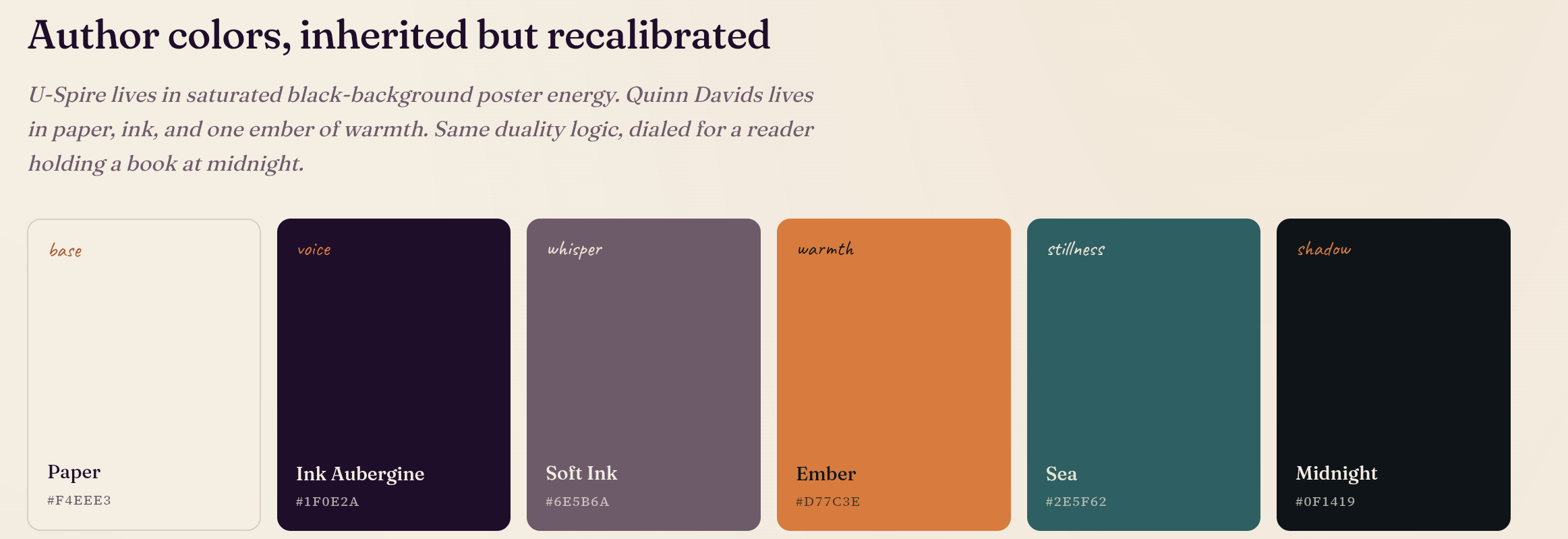
Paper, Ink Aubergine, Soft Ink, Ember, Sea, Midnight. Same duality logic as the parent brand, dialled for a reader holding a book at midnight.

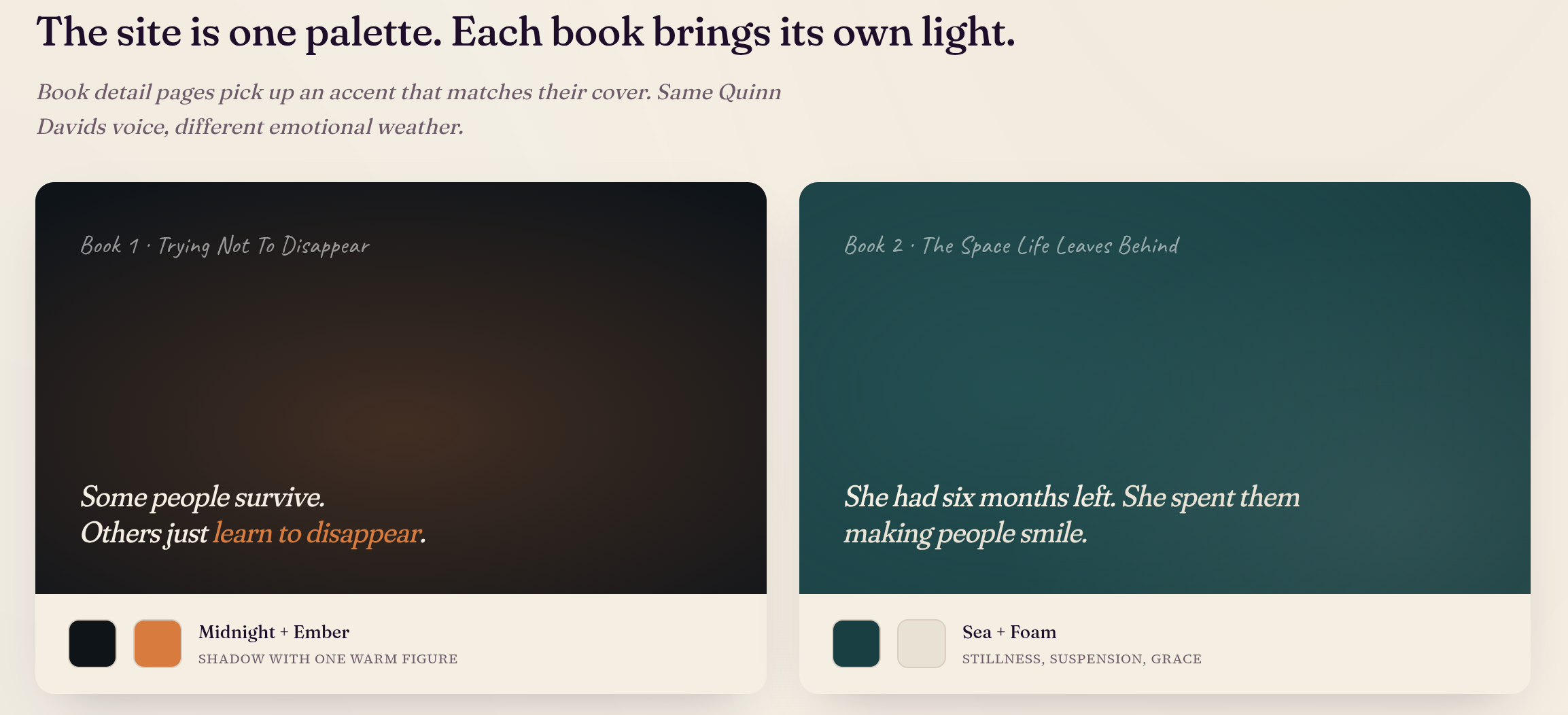
Two-book colour world plan: Trying Not To Disappear in Midnight + Ember, The Space Life Leaves Behind in Sea + FoamStep03

Colour worlds per book

One palette, two emotional weathers. Book 1 lives in Midnight + Ember; Book 2 lives in Sea + Foam. The site shifts as you walk it.

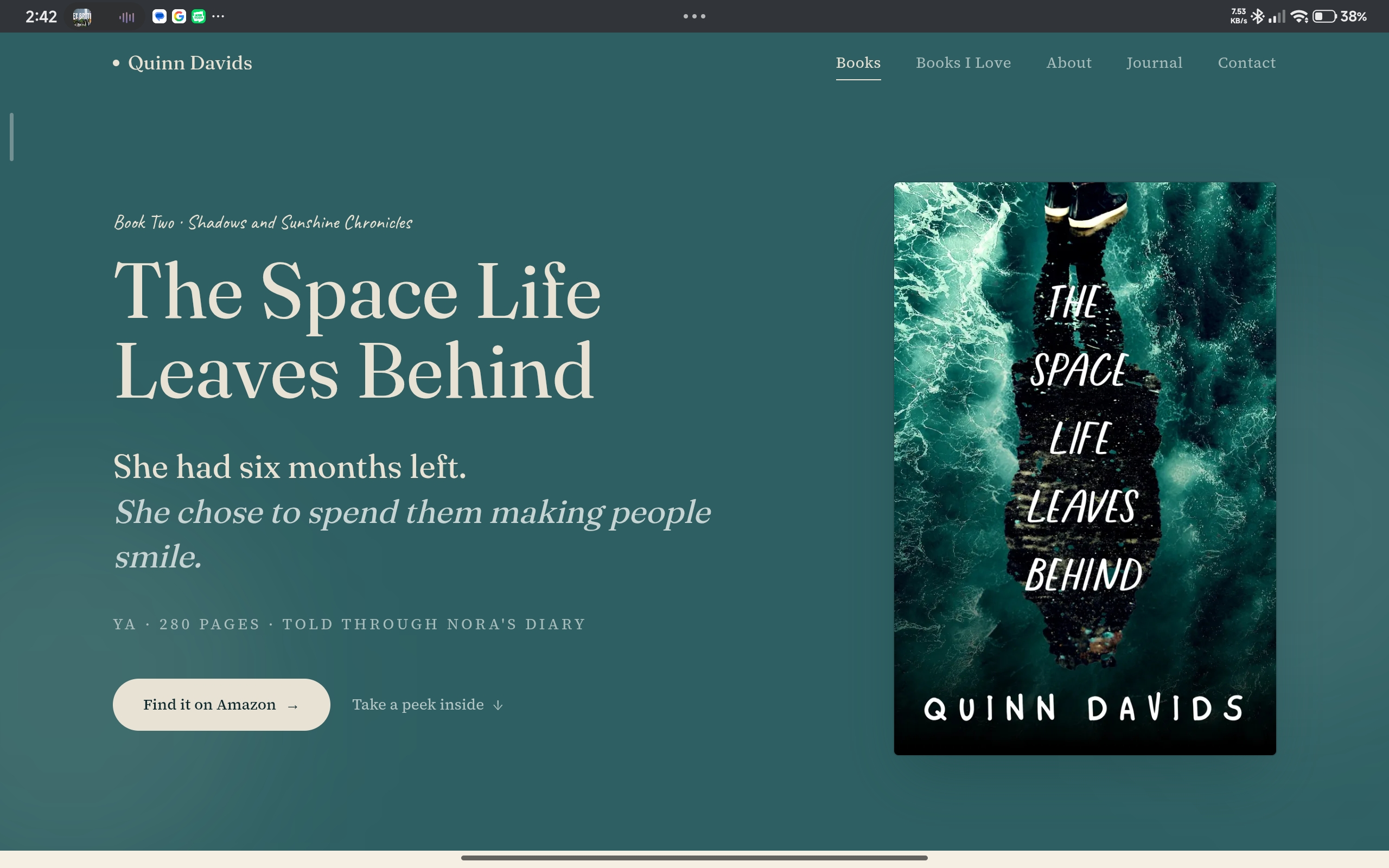
Live Quinn Davids book page for The Space Life Leaves Behind in the Sea + Foam colour worldDelivered

Delivered

Book Two's page in the Sea + Foam world — exactly the cool, oceanic light the concept artefact predicted.

Nigerian non-profit · OjayAjaifia Foundation

From mobile-first sketches, to a home for the work.

Visit live
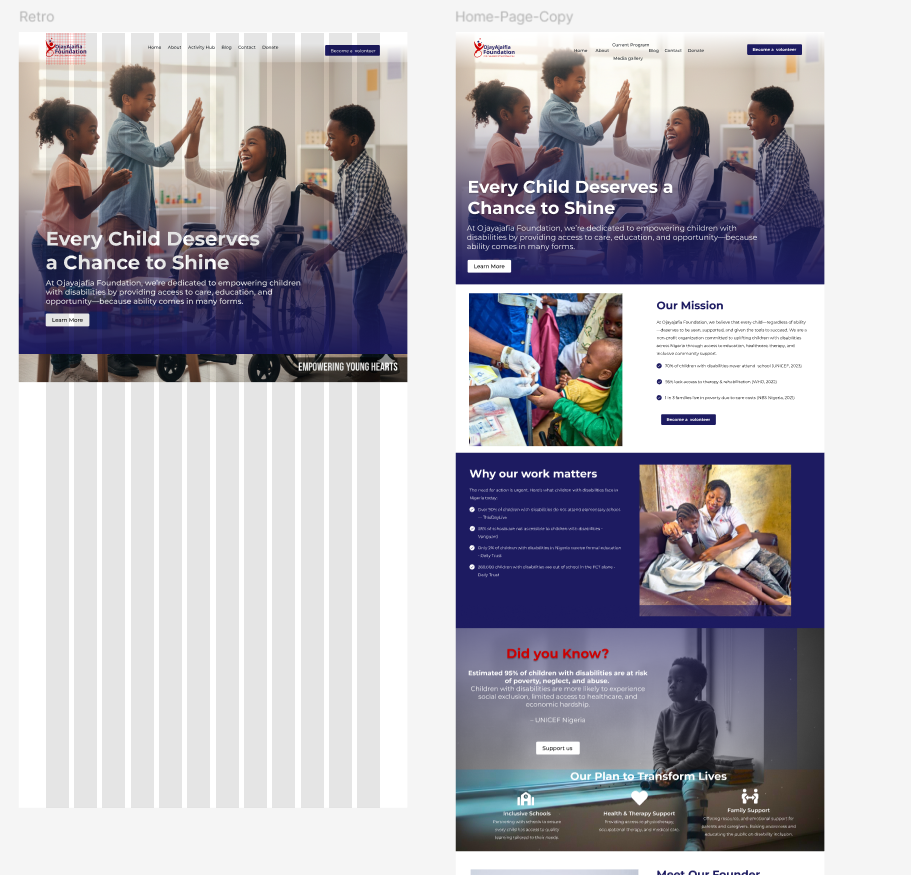
Mobile prototype screens for OjayAjaifia Foundation showing the home page on phone-sized layoutsStep01

Mobile-first prototype

Most visitors arrive on a phone. So the phone is where the design starts — not where it gets compressed to fit at the end.

Figma artboard view showing all eight page mockups for OjayAjaifia Foundation laid out side by sideStep02

The whole site, at once

Eight pages on one Figma board — Home, About, Programs, Media, Blog, Contact, Donation. Seeing the whole architecture before any pixel goes final.

Live OjayAjaifia Foundation home page with the 'Every Child Deserves a Chance to Shine' heroDelivered

Delivered

The home page live — every-child-deserves-a-chance imagery, stats-led storytelling, donate and volunteer paths within reach.

If this sounds like your project —

Let's walk the first stage together.

The first conversation is short, free, and grounded in your idea — not a sales pitch. Bring what you have; we'll bring the questions.